Introducing QUB-PHEO Dataset
Search for a command to run...

No comments yet. Be the first to comment.
In this series, I will talk about computer vision, ranging from very fundamental topics to very advanced ones.
If you would like to dive right into the code please see here In the ever-evolving landscape of computer vision, the transition from static imagery to the dynamic world of videos marks a significant leap to understanding the dynamicity of our world. ...
I first heard of the contextual bandit algorithm a couple of years back as an undergrad. I never gave much thought to it. Recently, I started working on reinforcement learning for the thrill of picking up my HRI research again and shaking off the dus...

Assurance Packs for AI Systems

The issue and ethical conundrum with equality of outcome is that those who advocate for this ideal want everyone to end up on the same level, hence the advocacy for equal redistribution of results, regardless of merit, effort, or individual differenc...

One of the interesting research projects I collaborated on with colleagues in China last year was using vision to predict the tendency of developing Alzheimer’s disease. We used images from diverse clinical datasets, which gave us a base and provided...

I know the hype is all around LLMs right now, but deep learning for computer vision continues to drive advancements in AI too – from your smartphone to applications at airports. Perhaps you would like to learn how to build yours. This past summer, I ...

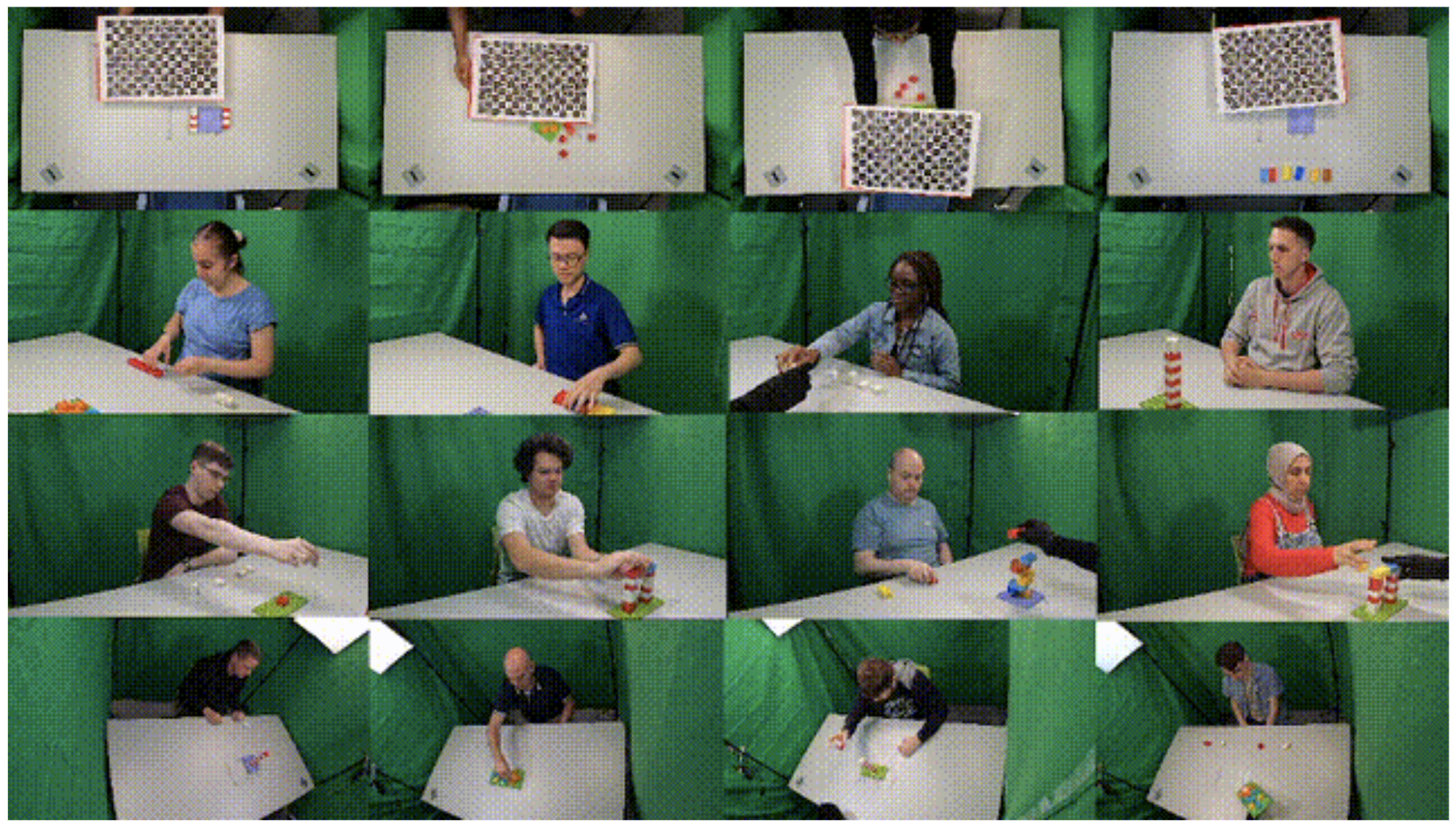
From June 2023 to January 2024, our team at the Centre for Intelligent Autonomous Manufacturing Systems, Queen’s University Belfast, conducted an extensive data collection project aimed at advancing human intention inference. Our goal was to validate the hypothesis that incorporating multiview, multimodal visual signals, especially fine-grained ones, can enhance the prediction of human intentions with precision down to the nearest second.
QUB-PHEO (Queen’s University Belfast, Perception of Human Engagement in Assembly Operations) is designed to support advanced research in human intention inference and engagement analysis. Our dataset provides a foundation for developing and testing innovative models and applications in this domain.

Project Highlights:Data Volume: Over 4.5 million 4K frames and 40+ hours of video dataTasks: 9 tasks and 36 subtasksParticipants: 70 individuals contributing diverse perspectives
We have thoroughly documented our methodology, approach, and core principles in our recently published paper in IEEE Access. You can access the paper here
Our datasets and preprocessing code are open source and available on GitHub
To gain access to the QUB-PHEO dataset, please visit: Dataset Access